Built for employment
Speak2Work focuses on job interviews, real occupations, workplace phrases, and practical comprehension instead of generic school-style themes.
This is not generic textbook English. Speak2Work is built around job interview English, workplace vocabulary, profession-based lessons, and practical repetition for people who need to understand, answer, and work in English with more confidence.
If you are searching for an English for job interviews app, an ESL app for work, or a better way to study workplace English for real jobs, Speak2Work is designed for that exact problem. The goal is simple: help learners recognize common interview questions faster, understand workplace language more naturally, and build useful English patterns they can actually reuse.
Speak2Work brings together listening, reading, grammar, vocabulary, translations, and profession-based practice in one focused learning flow. It is made for newcomers, immigrants, job seekers, international students, and practical learners who want targeted English for employment, not random classroom topics.

Many English apps teach broad vocabulary, travel phrases, or casual conversation. Speak2Work focuses on the language patterns people need when applying for jobs, answering interview questions, understanding workplace instructions, and learning profession-specific vocabulary that actually appears in real work situations.
Speak2Work focuses on job interviews, real occupations, workplace phrases, and practical comprehension instead of generic school-style themes.
Users can enter a role and practice English inside a more realistic context, which makes the learning feel more relevant and more memorable.
The training style is based on repeated exposure to realistic question-and-answer patterns so learners can respond faster under pressure.
Translation support reduces friction and helps users stay inside the learning flow while building real English for interviews and work.
People rarely search for “English app” in the abstract. They search for things like English for job interviews, workplace vocabulary app, ESL for immigrants looking for work, English for warehouse jobs, or how to answer interview questions in English.
Speak2Work matches that real intent. The app is designed around work scenarios, profession-based modules, realistic listening, targeted reading, focused grammar, and vocabulary that helps learners sound clearer and feel less lost in interviews and on the job.
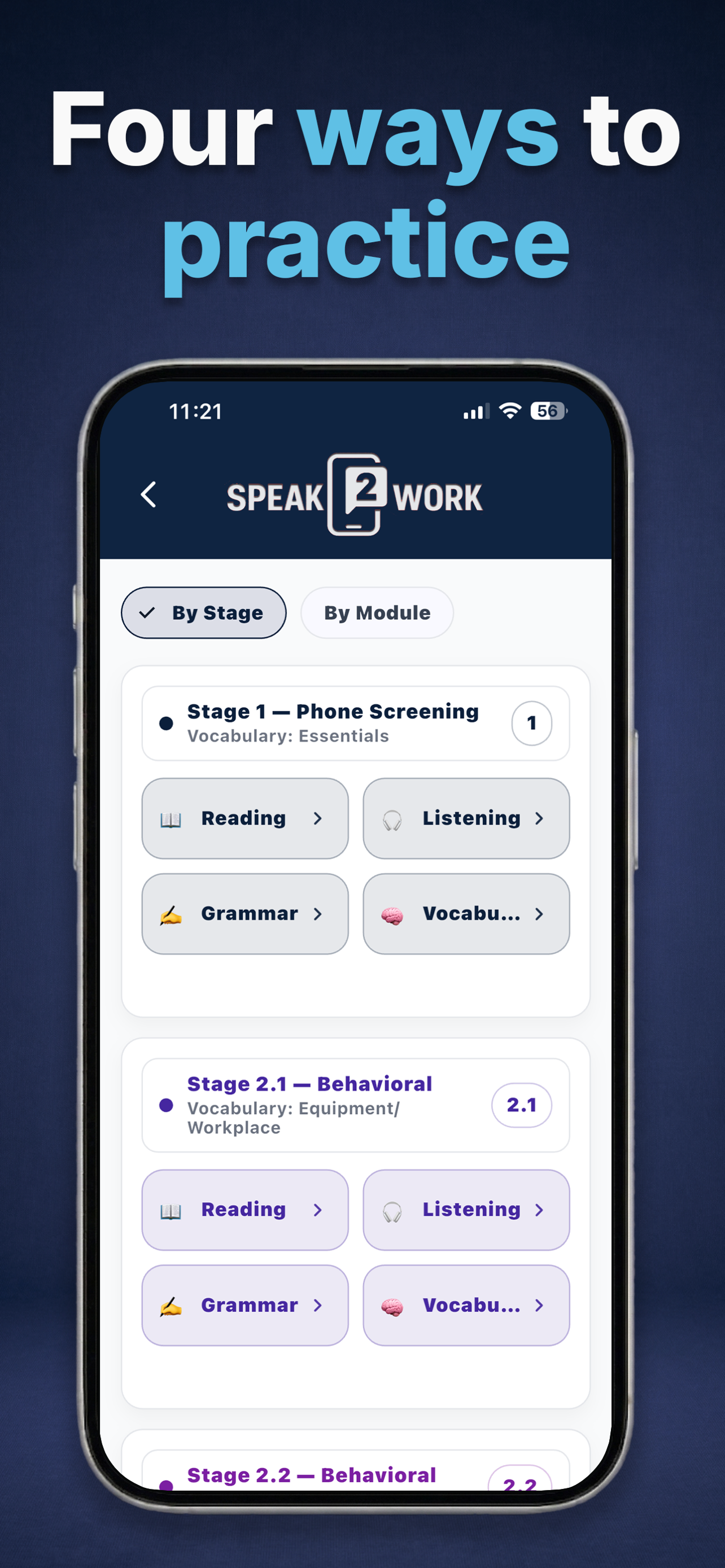
Speak2Work combines several learning modes into one practical system. Instead of separating grammar, reading, vocabulary, and listening into unrelated topics, the app keeps them connected to employment, professions, and realistic English use.
Users practice understanding common question forms, everyday HR language, and repeated answer structures. This helps them stop translating everything word by word and start recognizing patterns faster.
The reading sections stay close to employment realities. Instead of abstract passages, they are designed to support workplace understanding, job-related comprehension, and profession-specific context.
Grammar inside Speak2Work is there to help learners say things better in real situations. The focus is not theory for theory’s sake, but sentence patterns that support actual interview and work communication.
Instead of giant generic lists, vocabulary is anchored to professions, tasks, and workplace situations. That makes review more meaningful and makes words easier to remember.
The app uses a stage structure so users can move through content step by step. This makes the learning path feel clear, manageable, and easier to return to every day.
Translation support helps users stay with the lesson instead of leaving the app to search for meaning. That is especially helpful for practical learners with limited time and high real-world pressure.
Generic English apps often spread attention across everything. Travel phrases, casual topics, random words, and general school exercises may help a little, but they do not always prepare users for interviews, real work instructions, or profession-based vocabulary.
Speak2Work narrows the mission. It is about job interview English, workplace English, real professions, practical vocabulary, and sentence patterns users can actually apply when they need work.
That focus changes the feeling of study. The content feels more concrete, the goal is easier to understand, and the learner can feel why each lesson matters.
Below you can watch short videos that introduce the main Speak2Work learning flow, show how profession-based training is organized, and explain how multilingual support makes practical English study easier for real job goals.
This video introduces the app, the profession-based home screen, and the general idea behind learning English for interviews and work instead of generic topics.
This walkthrough shows stages, lesson structure, and how listening, reading, grammar, and vocabulary work together inside one focused learning flow.
This video highlights translation support, clearer comprehension, and the practical value of learning job English with less friction and more context.
This cleaner showcase now uses one swipeable slideshow window with more content inside it. It auto-rotates, supports manual swipe on touch devices, and lets users browse more of the new English release without a long wall of images.
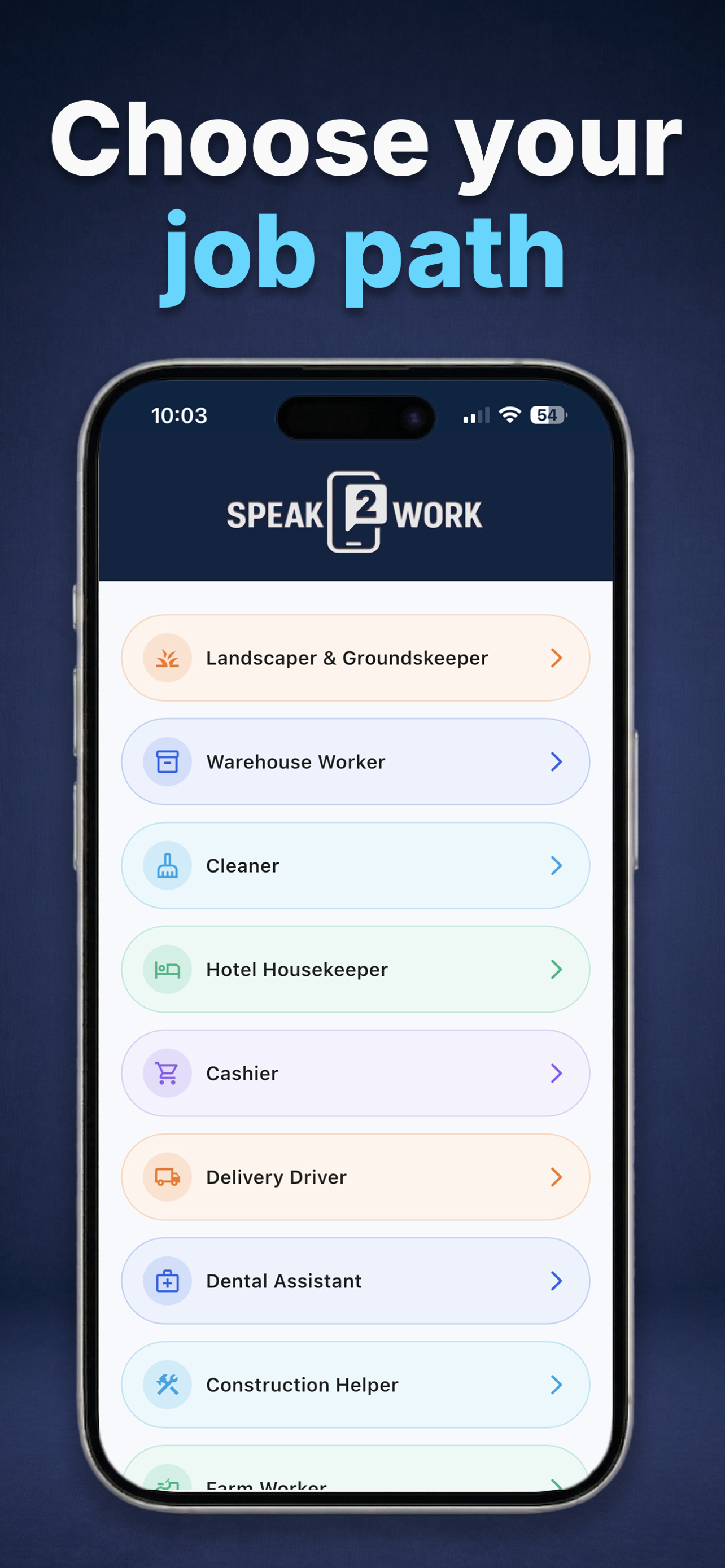
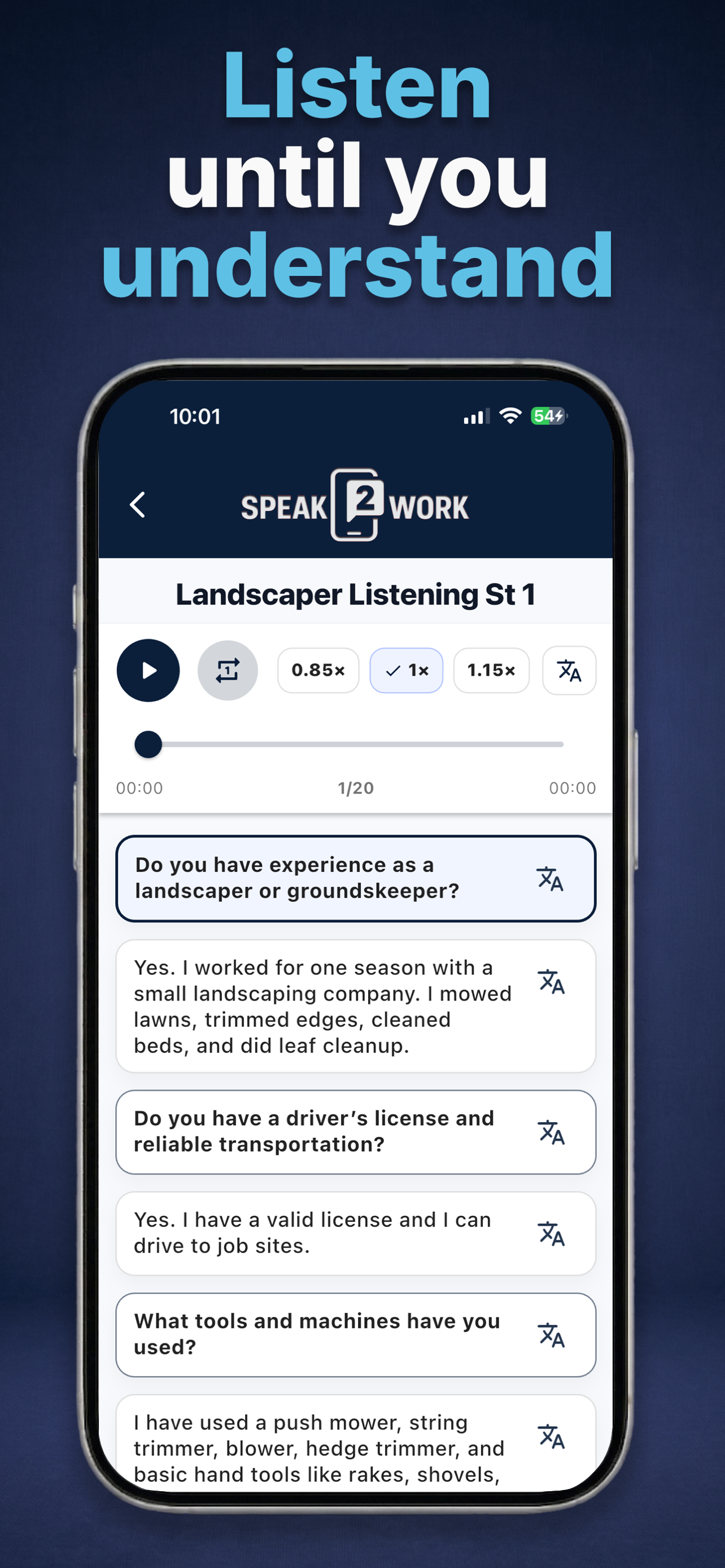
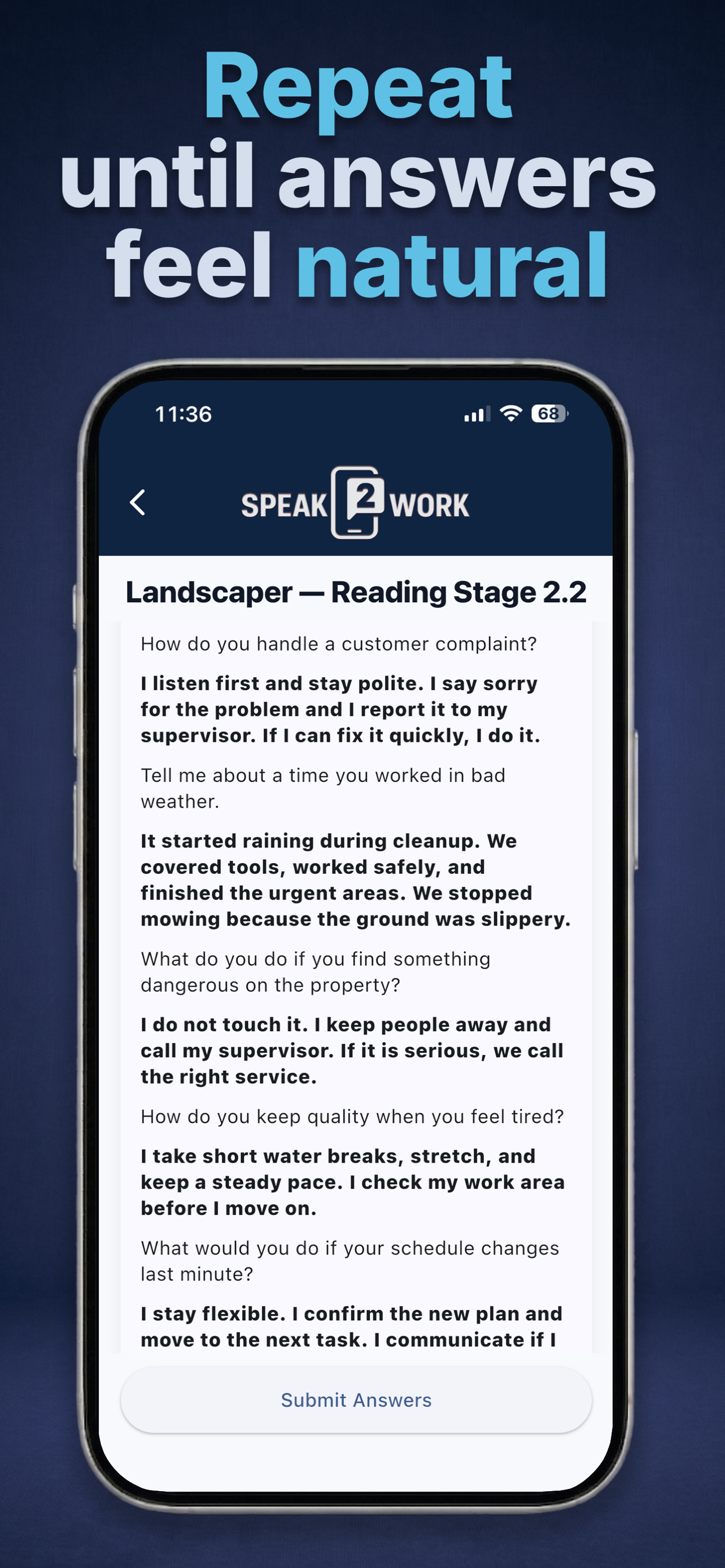
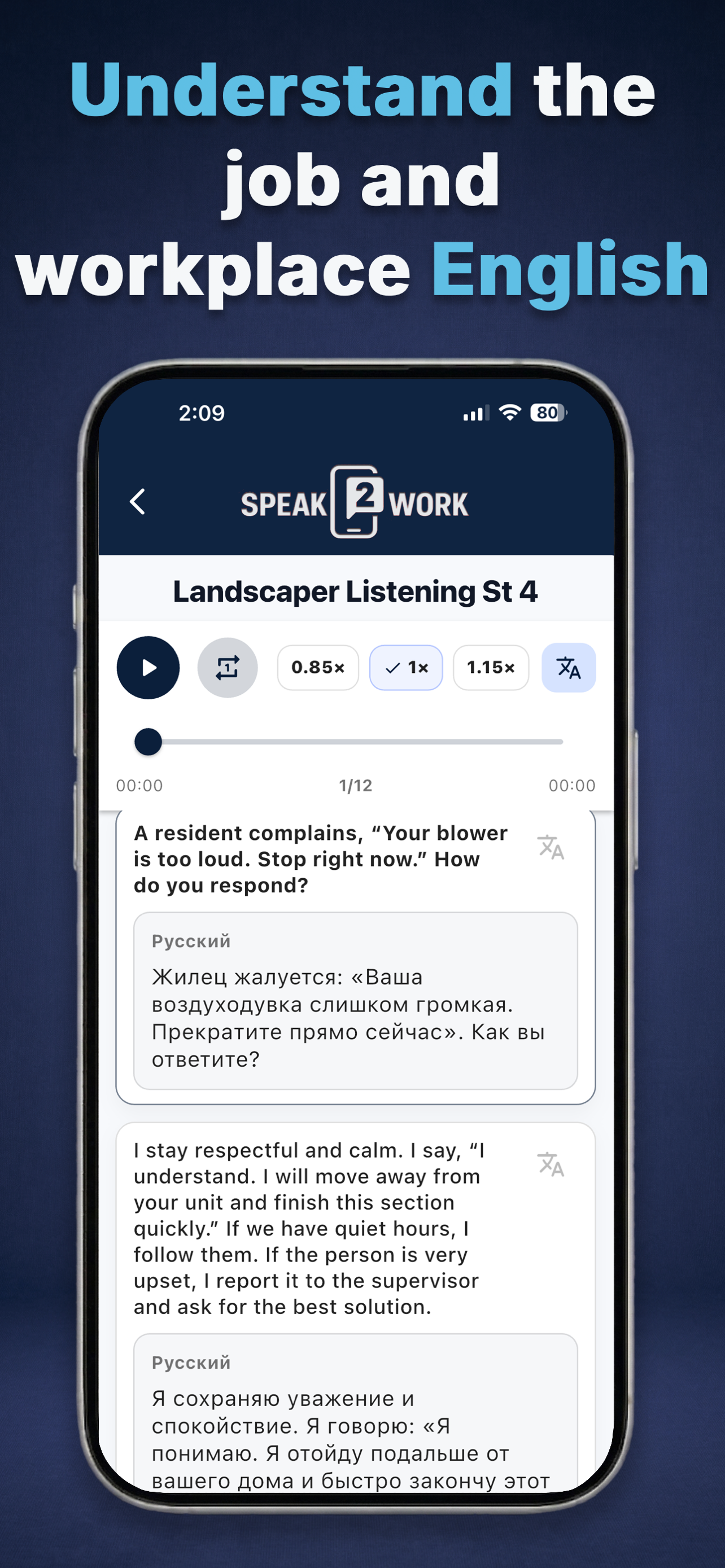
Speak2Work becomes more useful because it is not built around one abstract learner. It is built around actual work directions. Profession-based learning helps vocabulary, interview answers, and reading practice feel more concrete and more memorable.
Practice useful phrases, likely vocabulary, and workplace understanding connected to warehouse tasks, instructions, and interview expectations.
Train with more realistic English around cleaning work, employer questions, routine vocabulary, and day-to-day task language.
Build practical English for customer-facing jobs, money-handling contexts, polite responses, and common service interactions.
Strengthen vocabulary and useful sentence patterns connected to routes, timing, communication, and service expectations.
Study job-related English with more specialized vocabulary, real role context, and profession-based reading and listening practice.
Practice language connected to outdoor work, tools, tasks, simple instructions, and the vocabulary learners may meet on real job sites.
People do not fail interviews only because they do not know enough English. Very often they fail because they cannot retrieve the right English fast enough under pressure. Speak2Work is built around that exact gap: recognition, repetition, profession-based context, and reusable answer patterns for real job situations.
This version uses a larger swipeable window with more localized screenshots inside it. It still rotates automatically, but now users can also swipe manually to browse more multilingual examples at their own pace.

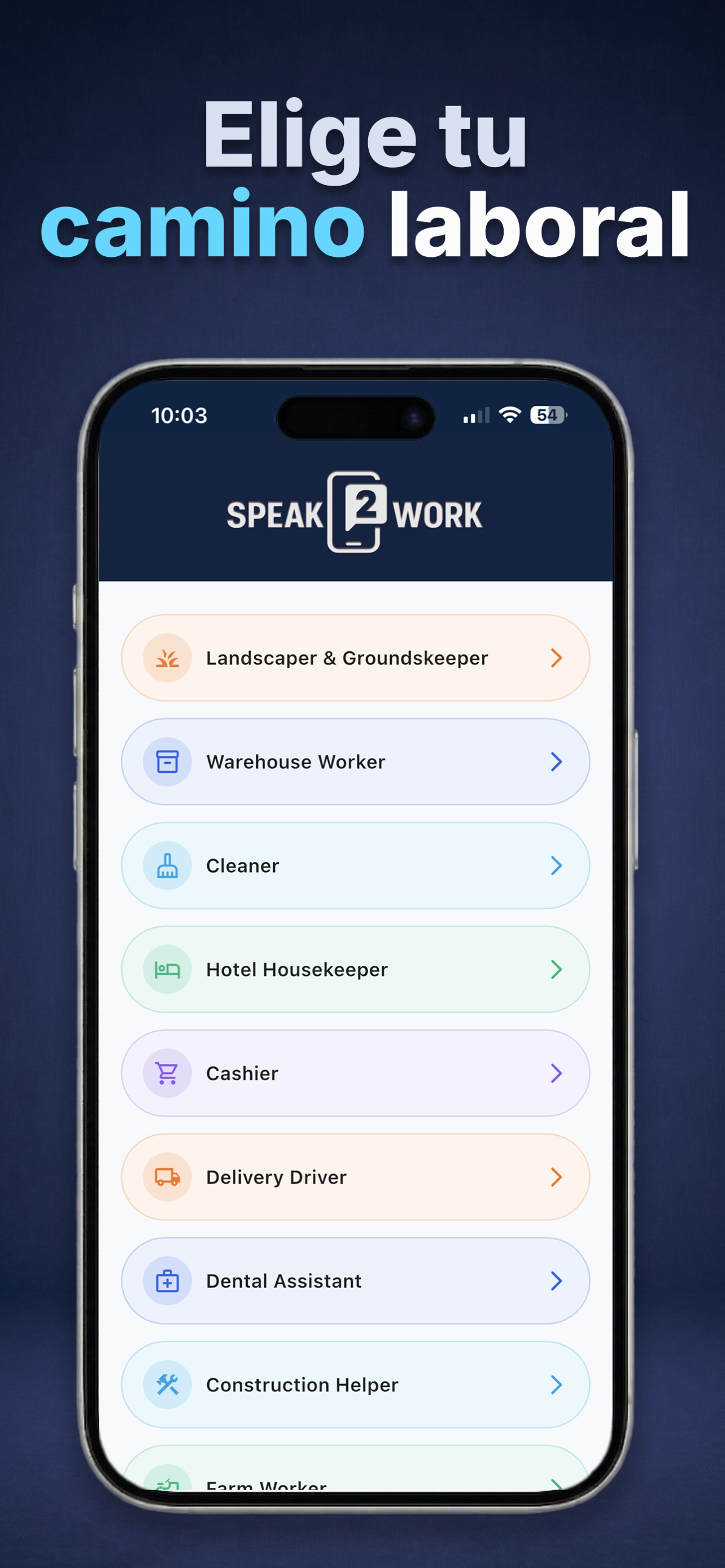

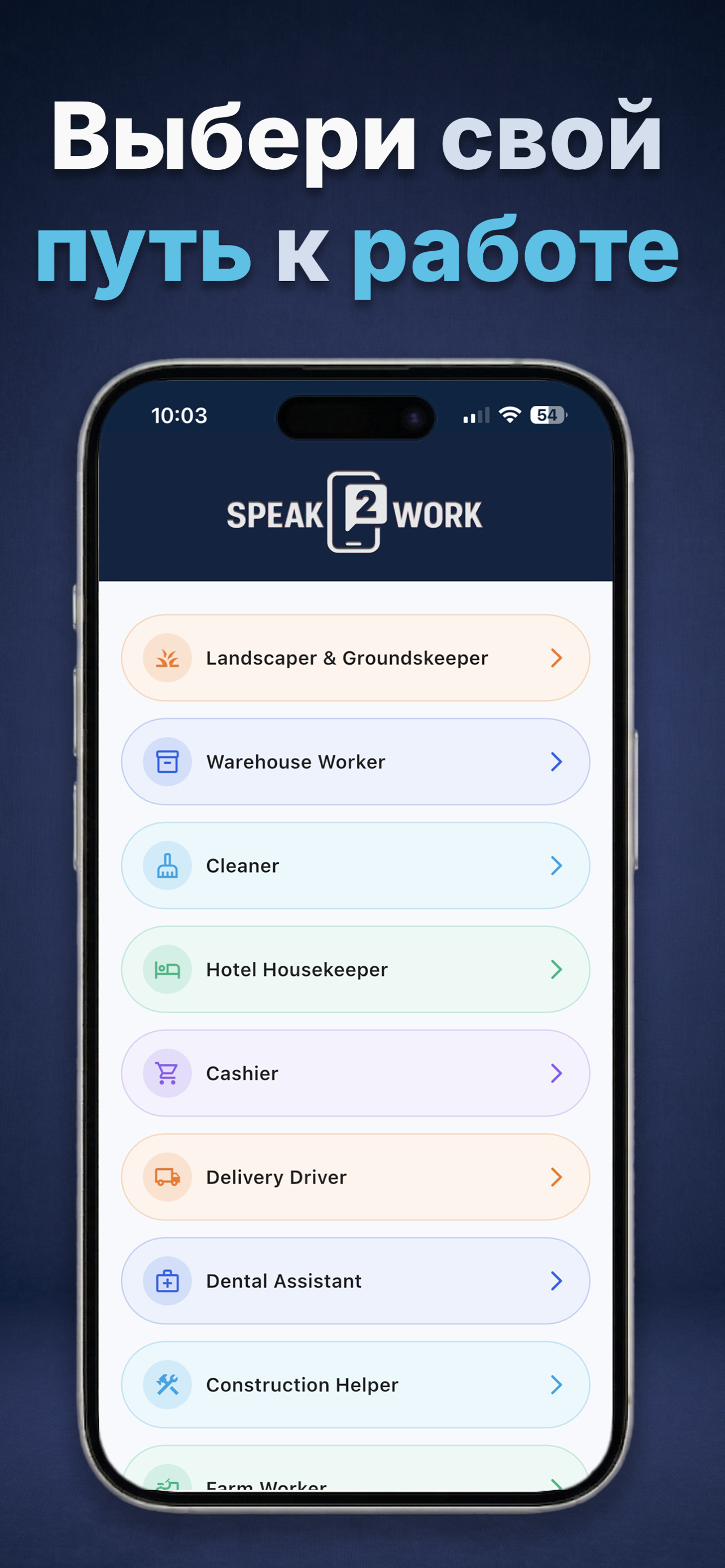

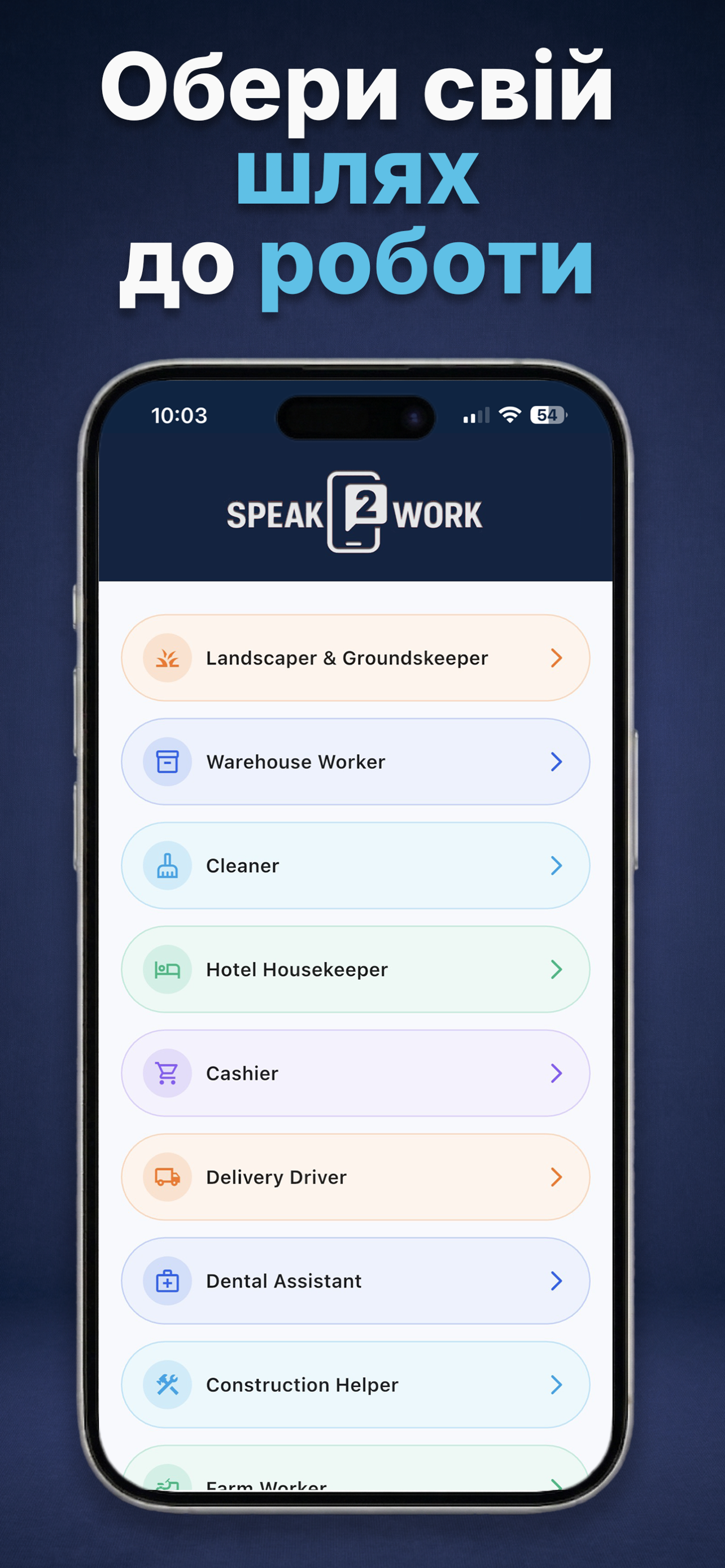
Job interview English requires speed and pattern recognition. Learners often know more English than they can actually use under pressure. Speak2Work tries to close that gap through repetition, profession context, and recognizable answer structures.
Workplace English requires context. General vocabulary is not always enough when learners need instructions, task language, or profession-specific wording. Speak2Work keeps the content closer to real job situations.
Profession-based English improves relevance. When users study inside a recognizable occupation, the language feels more grounded, more useful, and easier to remember.
This FAQ block is intentionally written to capture natural search-style questions around interview English, workplace English, profession-based learning, and multilingual support.
If your goal is clearer interview English, stronger workplace vocabulary, and a more realistic way to study English for jobs, Speak2Work gives that journey a sharper focus.
Speak2Work is for users who want a more direct route to interview English, workplace understanding, and profession-based vocabulary. The page is designed to explain the product clearly, visually, and in enough detail for practical learners who want to know what they will actually get.